Brazilian and international critics have confidently predicted that Wagner Moura and The Secret Agent will be Oscar contenders in 2026. After watching Blue Moon, however — starring Ethan Hawke as Broadway lyricist Lorenz Hart — I respectfully beg to differ.
As one American critic aptly observed, this intimate portrait of the man who wrote That’s Why the Lady Is a Tramp, My Funny Valentine, and Blue Moon would make a superb stage play. Yet it is also an excellent — and unforgettable — film, one that has deservedly earned critical acclaim.
Directed by Richard Linklater, with a poetic and intelligent script by Robert Kaplow, Blue Moon stands as a quiet but affirmative declaration that cinema — even in an age when many moviegoers read little beyond Facebook posts — still belongs alongside poetry, literature, and music as a serious art form.
This is not a film for viewers seeking grandiose special effects à la Star Wars, breathless action, or an overt political message. Its power lies elsewhere. Subtlety abounds, and many references may pass unnoticed by younger audiences. Among them are appearances or allusions to a young Stephen Sondheim, friend and protégé of Oscar Hammerstein (portrayed in the film); the great New Yorker essayist E. B. White, seated quietly at the bar of Sardi’s; and nods to the cinematic classic Casablanca, to name just a few.
The film also serves as a nostalgic evocation of a New York City that no longer exists — a Manhattan where Broadway musicals had full orchestras in the pit rather than small electronic ensembles; where newspaper critics could make or break a show with reviews that arrived hot off the press around 3 a.m.; and where America, even amid World War II, felt far more innocent than in the era of Czar Donald Trump.
At its core, Blue Moon tells the story of a fading Broadway genius spending one long evening both fleeing from — and confronting — the success of the man who replaced him as collaborator to one of America’s greatest songwriters, Richard Rodgers. It is a portrait of an artist facing a fast-changing world, artistically and otherwise, in which poetry, romanticism, and lyrical elegance are slowly but surely becoming “obsolete.”
In Brazilian terms, one might imagine Vinicius de Moraes or other revered figures from bygone eras suddenly returning to today’s hyper-digital, anti-romantic age. Would they, like Lorenz Hart, find themselves sidelined despite the enduring value of their art?
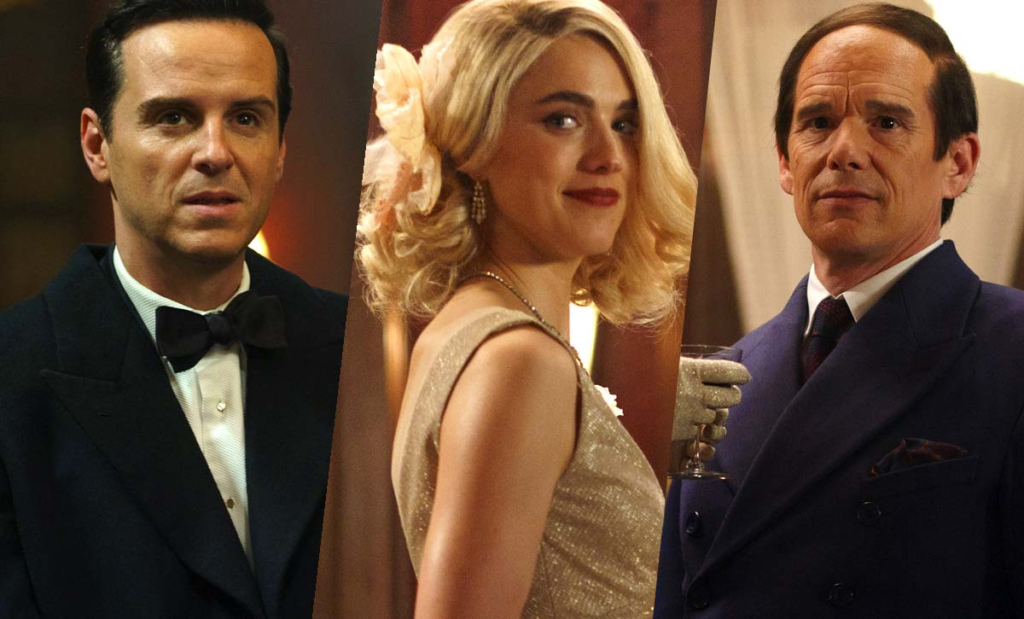
Beyond Ethan Hawke’s near-monologue performance — Oscar-winning, at least in my book — the supporting cast is exceptional. Andrew Scott is superb as Richard Rodgers; Bobby Cannavale brings warmth and humanity as the compassionate bartender; Giles Surridge quietly inhabits E. B. White; and Margaret Qualley, in particular, is an actress to watch. As Hart’s muse — romantic, conflicted, and deeply human — she delivers a performance of striking emotional credibility.
Set almost entirely in 1943 at Sardi’s, the legendary Broadway restaurant-bar, Blue Moon invites one final, lingering question: if these characters were transported 83 years into the future, what dialogue would they speak? Or would they, like so many today, simply sit in silence, scrolling through messages on their phones?