Ancient Sounds, Timeless Emotions: The Shanghai Chinese Orchestra Enchants Rio
PTLeia este artigo em portuguêsSons Antigos, Emoções Atemporais: A Orquestra Chinesa de Xangai Encanta o Rio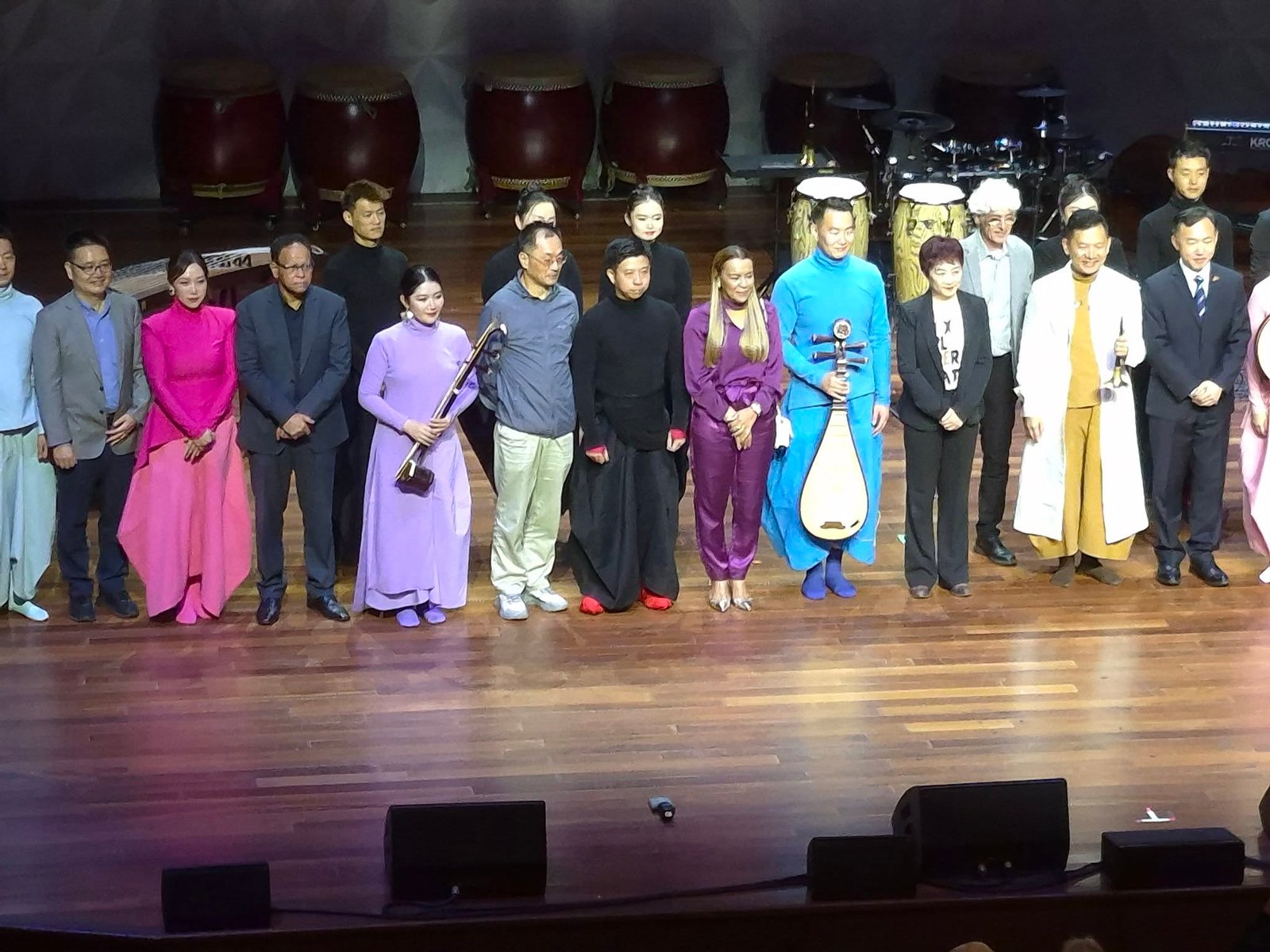
By Harold Emert
I left Rio de Janeiro's Sala Cecília Meireles after an unforgettable evening with the Shanghai Chinese Orchestra convinced that there truly is nothing new under the sun.
The concert transported the audience through thousands of years of musical history with instruments that predate the great masters of Western classical music by centuries—even millennia. Among them were the sheng, a mouth organ with a history stretching back some 3,000 years; the dizi, a bamboo flute more than 2,000 years old; the elegant guzheng, a 2,500-year-old plucked zither; the erhu, the expressive two-stringed fiddle often called the “Chinese violin”; and the pipa, a four-stringed lute whose ancestry also reaches back two millennia.
These remarkable instruments existed long before Bach, Telemann, Mozart, Beethoven, Brahms—or even The Beatles. Yet they communicate the same universal emotions that music has always inspired.
As a retired—but not expired—professional oboist, I am constantly searching for unfamiliar sounds, and none captivated me more than the suona, a piercing double-reed instrument believed to have reached China from Central Asia or Persia via the Silk Road during the Yuan Dynasty (1271–1368).
The brilliant suona soloist—unfortunately, like the rest of the outstanding musicians, not identified in the concert program but whom, via Google, I identified as Hu Chenyun—was, for me, the evening's star. His dazzling virtuosity and commanding stage presence transformed the instrument into a breathtaking expressive voice. Its brilliant, penetrating tone immediately reminded me of Luciano Berio's Sequenza VII (1969), the revolutionary solo work written for the legendary Swiss oboist Heinz Holliger. Hearing such striking sonorities from an instrument whose origins go back centuries was a vivid reminder that many sounds we consider “modern” have ancient roots.
Beyond the music itself, the production was equally impressive. The subtle lighting, the elegant costumes, and the performers' perfectly choreographed entrances and exits created an atmosphere of refinement that perfectly complemented the artistry on stage.
The program featured a series of evocative works, including The First Dawn, highlighting the shimmering sonorities of the sheng, and Brilliant Yellow, which showcased the rich colors of the xiao and guzheng. Particularly memorable was Lotus Flowers, whose delicate textures and luminous harmonies seemed to anticipate the musical impressionism of Debussy and Ravel by centuries.
The evening reached its dramatic climax with Mysterious Twilight, an electrifying work for Chinese drums. Its thunderous rhythms and explosive energy were as startling as the violent storm that swept across Brazil earlier this week. Musically, its dramatic power recalled the terrifying final scenes of Berlioz's Symphonie fantastique, proving once again that emotional intensity knows no cultural boundaries.
The orchestra's Brazilian tour forms part of the official celebrations of the China–Brazil Year of Cultural Exchange. Although the Shanghai Chinese Orchestra was founded in 1952, it preserves and continually renews a musical tradition that spans thousands of years—a tradition whose sophistication challenges the long-held assumption that Western music alone represents the pinnacle of artistic achievement.
Following its Rio appearance, the orchestra continues its Brazilian tour with performances in São Paulo (August 1), Brasília (August 4), Belo Horizonte (August 6), Curitiba (August 9), and Porto Alegre (August 11).
My thanks to Miriam Dauelsberg and Dell'Arte for bringing this extraordinary ensemble to Brazil. One hopes this will not be a farewell, but the beginning of many more opportunities for Brazilian audiences to experience one of the world's oldest—and most vibrant—musical traditions.


Comments
Sign in with GitHub to leave a comment.
Comments use GitHub and Giscus. Loading this area opens a third-party service: your GitHub profile, comments, reactions and metadata may be public on GitHub and this site. Read the Privacy Policy.
Comments will load after your confirmation.