“Keep Far Away From Politics” — The Sage Advice of My Late Mother
PTLeia este artigo em português“Fique bem longe da política” — O sábio conselho da minha falecida mãe
A Veteran Observer's View of Brazil's Unpredictable Presidential Election
By Harold Emert
“Keep far away from politics.”
That was the sage advice of my late mother. And perhaps she was right.
Yet politics has a curious way of finding us, whether we want it to or not. In the United States, more than 70 million eligible voters did not vote in the 2024 presidential election — a reminder that millions of people can decide that politics simply does not interest them, while the consequences of an election affect everyone.
Thursday morning (13 August), I found myself sitting through a fascinating seminar on Brazilian elections at the Getulio Vargas Foundation (FGV) in Botafogo, Rio de Janeiro. Four specialists offered their views on what may happen when Brazilians go to the polls this October.
The conclusion of FGV professor Jairo Nicolau was particularly striking: voters, he suggested, are “not very excited by the current candidates.”
That may be an understatement.
A Brazilian presidential election is, like elections in many countries, impossible to predict with certainty. And there are still plenty of opportunities for unforeseen events before the first round on October 4 and the second and final round on October 25, should one be necessary.
My own conclusion after listening to the experts was simple: Brazil is an extraordinarily difficult country to govern and faces enormous problems. But there is another, more personal concern for every voter — the candidate I do not like could win.
And whoever wins will have enormous influence over the lives of Brazil's more than 213 million inhabitants.
The “Dinosaur” With His Newspaper
Before the seminar began, I arrived on time — and discovered that I was apparently the only dinosaur in the room.
Why?
I was sitting there reading a printed copy of O Globo.
The newspaper contained a story about a presidential candidate whose campaign website allegedly listed postgraduate qualifications from academic institutions he had never attended. It immediately reminded me of the extraordinary controversies surrounding the 2022 election.
There were allegations of voters being prevented from reaching polling stations, reports of people being offered money to vote for a particular candidate and other controversies surrounding the electoral process.
I also remembered a personal experience from a political rally I attended, when, suddenly and rather suspiciously, the lights went out — along with the electricity and the microphone.
Could such incidents happen again this year?
I certainly hope not.
Is Electoral Justice Stronger Today?
Silvana Batini, a Rio de Janeiro regional electoral prosecutor and law professor, offered a more reassuring perspective.
She argued that Brazil's electoral justice system is much quicker and more efficient than it was in the past.
But she also made a point that caught my attention: although electoral justice was once institutionally separate from Brazil's Supreme Court, she believes that today it has become increasingly subordinate to it.
For a foreign-born Brazilian who has watched this country's political drama for decades, that is a subject worthy of debate.
Do Brazilian Voters Have Short Memories?
As a veteran observer, I cannot help remembering the previous administration and the extraordinary controversies that surrounded it — including its mishandling of the Covid-19 pandemic, its government appointments of disqualified persons and its battles with what it regarded as Brazil's “left-wing, elitist” cultural establishment and near-destruction of federal universities, which remain free of charge (despite those efforts).
The pandemic alone left a devastating legacy, with Brazil recording 700,000 deaths.
So, do Brazilian voters have short memories?
“I don't know,” was the answer I received from one expert.
But Marco Ruediger, director of FGV's School of Communication, offered an interesting observation. In his view, former President Donald Trump's attacks on Brazil could actually help President Luiz Inácio Lula da Silva politically.
Whatever happens in October, Ruediger believes the influence of the political right associated with former President Jair Bolsonaro will remain an important factor in Brazilian politics.
“It's the Economy, Stupid”
Another lesson from the seminar was one that echoes an old American political slogan associated with Bill Clinton's 1992 campaign:
“It's the economy, stupid.”
Professor Raphael Chaves pointed to Brazil's disappointing economic growth and high interest rates as major challenges.
His assessment was blunt: under the present administration, Brazil is spending more than it earns.
As an observer, I could not resist thinking that this is hardly a problem restricted to the federal government.
Brazil has plenty of examples of politicians and public officials enjoying generous salaries and additional benefits — including housing allowances and other payments — while ordinary Brazilians struggle with the cost of living.
Trying to Explain the Inexplicable
After listening to four experts discuss elections, democracy, economics and electoral justice, I left the Getulio Vargas Foundation with perhaps more questions than answers.
But that is probably the nature of Brazilian politics.
My late mother advised me to stay far away from politics.
After all these years in Brazil, I have discovered that this is considerably easier said than done.
So I can only thank the Getulio Vargas Foundation for organizing a seminar that attempted to explain the seemingly inexplicable:
a Brazilian presidential election.
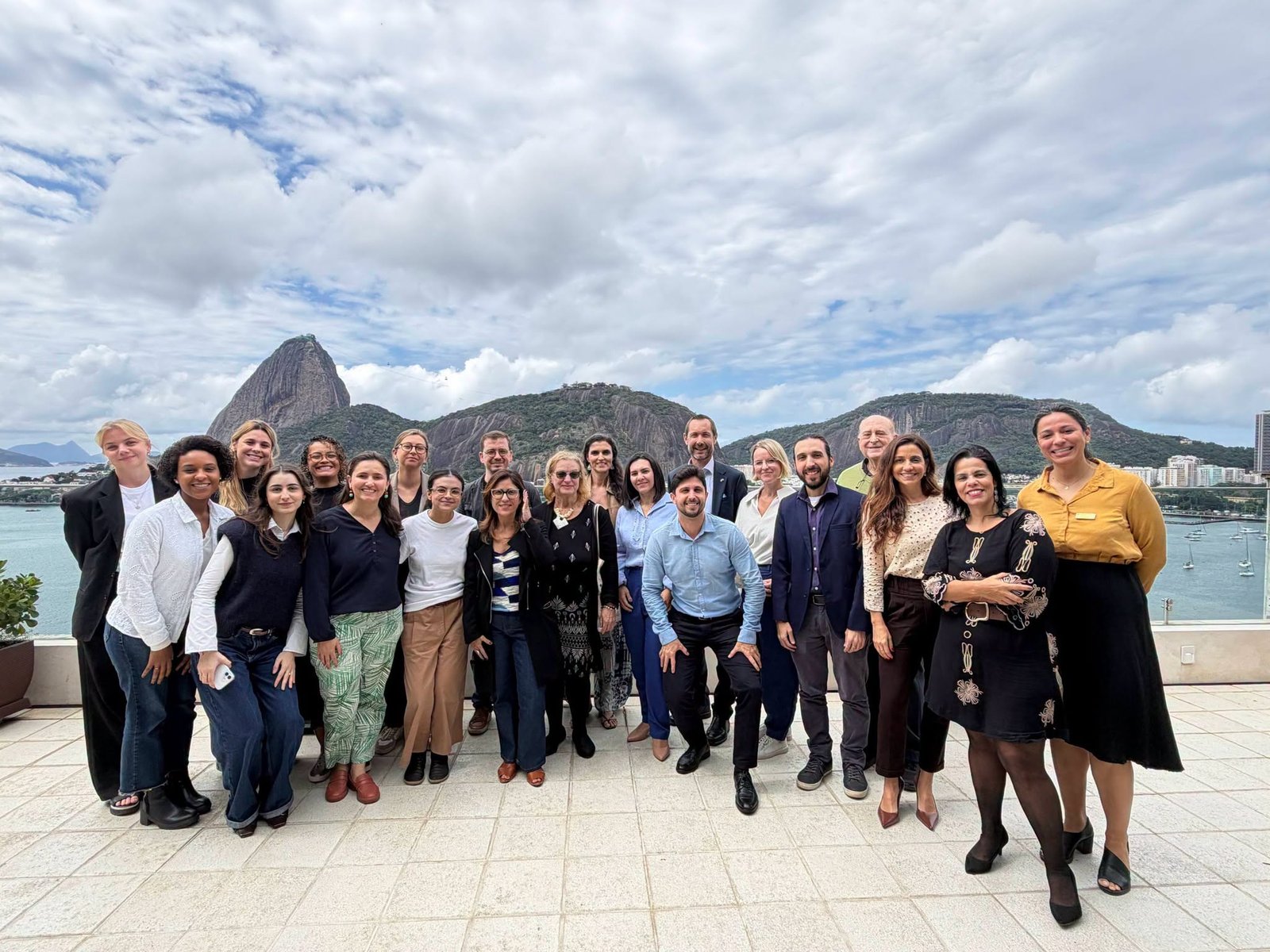
Photo: Professor Raphael Chaves lecturing on “It's the economy, stupid” at the Seminar of Brazilian Election.


Comments
Sign in with GitHub to leave a comment.
Comments use GitHub and Giscus. Loading this area opens a third-party service: your GitHub profile, comments, reactions and metadata may be public on GitHub and this site. Read the Privacy Policy.
Comments will load after your confirmation.